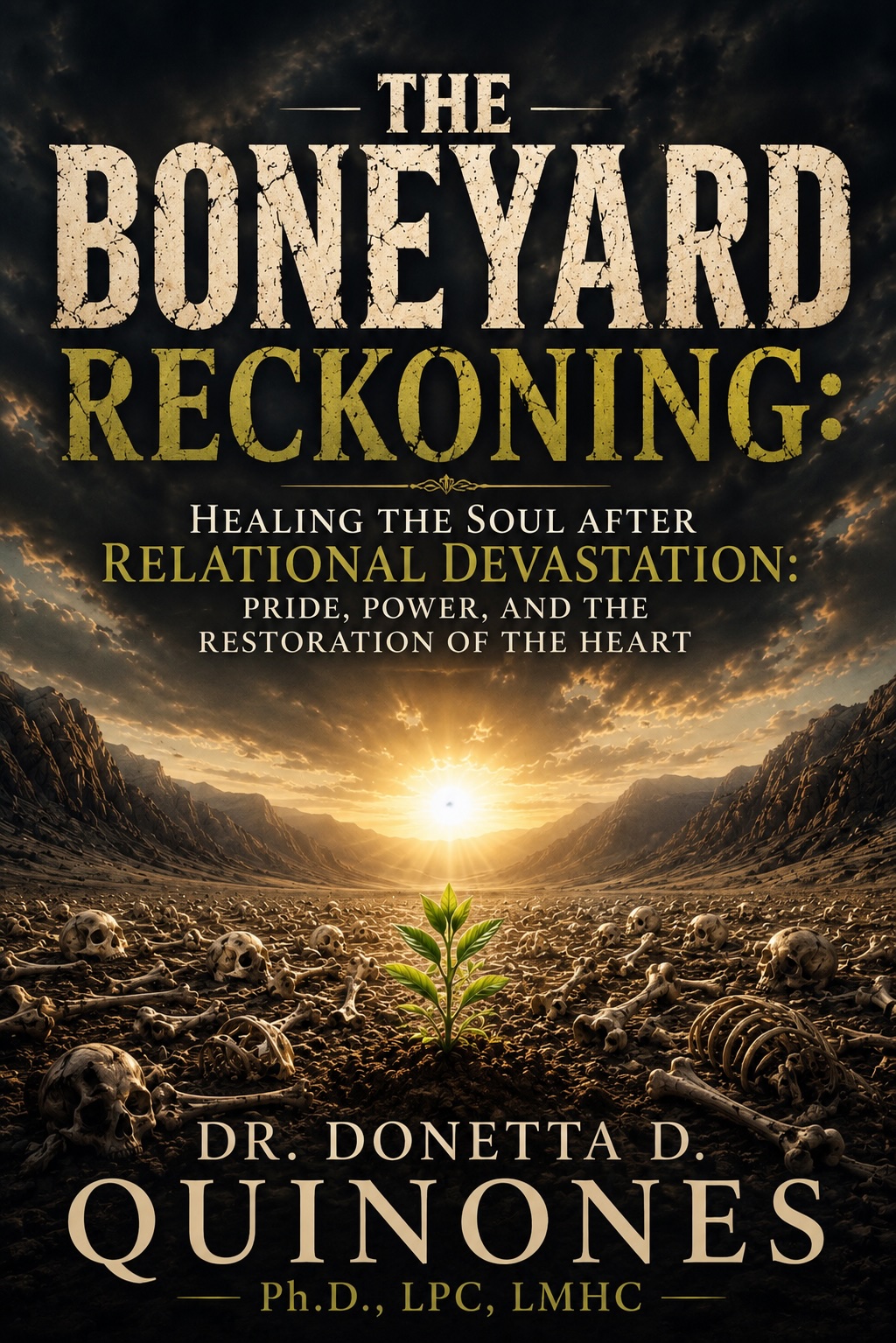
When what was once whole lies scattered, restoration must happen in order.
The preface of The Boneyard Reckoning begins with Ezekiel 37, where the prophet stands in a valley of very dry bones. Dr. Quinones uses that image as a trauma-informed and theologically grounded framework for understanding what happens after relational devastation: exposure, neglect, rupture, spiritual confusion, and the slow loss of structure. The book does not rush readers toward forced closure. It invites them to see clearly, name what collapsed, and rebuild in an order that can actually hold life.
Truth before repair Harm must be seen clearly before it can be healed honestly.
Structure before closeness Safety, accountability, and order come before renewed intimacy.
Boundaries before breath Protection and distinction make restoration sustainable instead of performative.
Presence after rebuilding Life returns where truth, repair, and restored structure can hold it.
Why this book belongs inside the GraceRoot framework.
Relational integrity asks whether a relationship, family system, church system, or inner life can hold truth without collapsing into control, denial, or self-abandonment. The Boneyard Reckoning applies that principle to the aftermath of betrayal, pride, power misuse, spiritual harm, and fragmented identity.
The book resists reconciliation without safety and frames boundaries as part of restoration, not punishment.
Repair requires more than words. It requires structure, changed behavior, and sustained responsibility.
Exposure is not humiliation when it makes honest assessment and faithful rebuilding possible.
The book challenges pressure to rush forgiveness, intimacy, or spiritual closure before stability exists.
Relational devastation affects the nervous system, attachment patterns, grief, and the capacity for presence.
Wholeness may require new structures, wise distance, and a rebuilt moral center.
A reflective resource for people rebuilding after relational and spiritual rupture.
This book is written for readers in the valley and for the helpers who walk with them. It can serve as a reflective companion, a psychoeducational resource, and a bridge between clinical language and faith-rooted restoration.
For readers processing betrayal, abandonment, relational injury, religious harm, or identity fragmentation.
For trauma-informed providers seeking language around boundaries, accountability, grief, and spiritual injury.
For leaders who want to support restoration without bypassing safety, consent, or repair.
For discussion settings where participants need permission to slow down and rebuild with structure.
Start the reckoning with truth, structure, and hope.
Purchase the GraceRoot digital download for immediate access after checkout, or choose the paperback or hardback format through Amazon.
Educational and spiritual formation resource.
This book engages themes of trauma, relational rupture, faith, boundaries, accountability, grief, and restoration. It is not a substitute for psychotherapy, medical care, legal advice, crisis intervention, or emergency support. Readers experiencing severe distress, ongoing abuse, suicidal thoughts, dissociation, panic, or immediate safety concerns should contact emergency services, 988 in the United States, or a licensed professional.