PREFACE
The Boneyard Effect
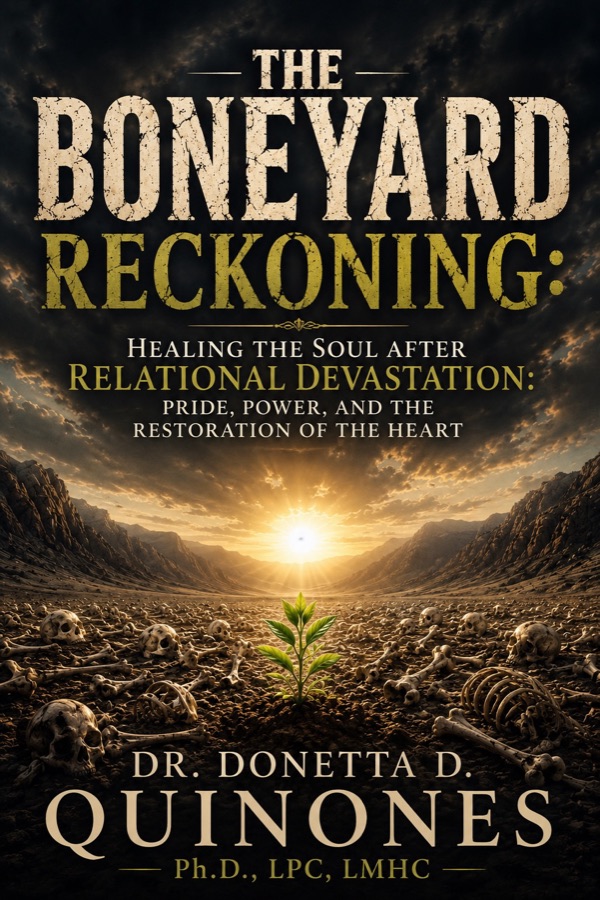
The opening image in Ezekiel 37 is unsettling. The Spirit leads the prophet into a valley. He doesn’t see recent destruction, but something more sobering: Very dry bones. These bones have been exposed for a long time. What was once whole and connected now lies scattered. The passage pauses here, drawing our attention and inviting reflection. It lingers with this image, asking us to consider what it means. From this moment, the story of the dry bones unfolds. These bones reveal neglect, exposure, and the passing of time without repair. They silently witness what happens when something falls apart and no one rebuilds it. They’re what remains when life was once present, but connection and restoration never came. To understand the weight of this vision, we need to grasp the historical moment in which Ezekiel received it.
The prophet wasn’t speaking to a people experiencing minor setbacks. He was addressing a community in profound crisis—exiled in Babylon, hundreds of miles from their homeland, watching smoke still rise from Jerusalem’s ruins. The Temple, the dwelling place of God’s presence, had been destroyed. The Davidic monarchy had collapsed.
The covenant promises that anchored their identity for generations seemed to have failed. This wasn’t just political defeat; it was theological catastrophe. If God’s house lay in ruins and His people were scattered among the nations, what did that say about God Himself? Had He abandoned them? Had their sin finally exhausted His patience? Was the covenant truly over? Into this despair, God gives Ezekiel a vision that is both devastating and hopeful. The valley of dry bones isn’t a gentle metaphor. It’s a visceral, confronting image that forces the exiles to see their situation clearly: They are as good as dead. Spiritually, relationally, nationally—they’re finished. The bones aren’t just dry; they’re very dry, meaning they’ve been exposed to the elements for a long time. There’s no flesh, no sinew, no breath. There’s no life left at all. Yet notice what God doesn’t do in this moment. He doesn’t shame the bones for their dryness. He doesn’t condemn them for being scattered. He doesn’t demand that they pull themselves together or try harder. Instead, He asks a question: “Son of man, can these bones live?” This question is not rhetorical. It’s an invitation to honesty.
Program Clarity
GraceRoot courses are psychoeducational learning programs, not emergency care, legal advice, or a replacement for therapy. Certificates document GraceRoot completion. Court, employer, board, or continuing education acceptance should be confirmed before purchase unless a page states a specific approval.
Ezekiel’s answer is telling: “O Sovereign Lord, you alone know” (Ezekiel 37:3). The prophet doesn’t offer false hope or pious platitudes. He acknowledges that humanly speaking, this is impossible. But he also leaves room for God to do what only God can do. This is where the vision reveals something essential about God’s character: He doesn’t require us to be whole before He begins restoration. He meets us in the valley. He initiates the process. He doesn’t wait for us to fix ourselves first. If you’ve been told to “get over it” or “just have more faith” before God will work in your life, this vision speaks directly to you. If you’ve been betrayed by a church leader, abandoned during crisis, or told to forgive without any accountability required of the one who harmed you, hear this: God doesn’t operate that way. He doesn’t shame you for being broken. He doesn’t demand that you manufacture hope you don’t feel. He begins with you exactly where you are— scattered, dry, seemingly lifeless—and asks, “Can these bones live?” The answer, of course, is yes. But not immediately. Not magically. Not by skipping steps.
God begins with a command to the bones: “I will cause breath to enter you, and you shall live. And I will lay sinews upon you, and will cause flesh to come upon you, and cover you with skin, and put breath in you, and you shall live, and you shall know that I am the Lord” (Ezekiel 37:5-6). Notice the sequence. It’s precise. Ordered. Not arbitrary. First, the bones come together. Structure is reestablished. What was scattered is gathered. What was disconnected is reconnected. This isn’t yet life, but it’s the necessary foundation. Second, sinews and flesh appear. Connection is strengthened. The bones are no longer just lying next to each other; they’re bound together, held in place, given form and shape. Third, skin covers them. Protection is provided. Boundaries are established. What is inside is distinguished from what is outside. Fourth, breath enters. Only after structure, connection, and boundaries are in place does the breath of God animate the body. Only then does life return. This sequence isn’t poetic license. It reflects a profound theological and psychological truth: Restoration must be sequential because human beings heal sequentially. You can’t breathe life into chaos.
You can’t have intimacy without boundaries. You can’t have trust without accountability. You can’t have connection without structure. This is why so many attempts at healing fail. We want to skip to the breath. We want the life, the energy, the hope, the reconciliation—now. We want to feel close to God again, to feel safe in relationships again, to feel whole again. And when we try to force that before the foundation is laid, we recreate the very instability we’re trying to escape. If you’re a therapist or counselor working with trauma survivors, this framework gives you a roadmap. You can’t rush your clients to forgiveness or closure before they’ve established safety and boundaries. You can’t push for emotional intimacy before trust has been rebuilt through consistent, accountable action. The sequence matters. Violating it retraumatizes. If you’re a pastor or ministry leader, this vision challenges how we often approach reconciliation in the church. We’re quick to call for forgiveness, slow to require accountability. We want people to “move on”
without doing the hard work of structural repair. We spiritualize the process in ways that bypass the necessary stages of healing.
Ezekiel 37 won’t let us do that. God Himself models a careful, ordered, patient process of restoration—and if God doesn’t rush it, neither should we. If you’re a small group leader facilitating discussion around trauma, betrayal, or relational breakdown, this sequence gives you permission to slow down. You don’t need all the answers. You don’t need to fix people. You need to create space for them to be honest about where they are in the process—and to resist the pressure to skip steps. And if you’re reading this book because you are in the valley yourself—because your marriage has collapsed, your faith has been shattered, your sense of self has fragmented— hear this: The path is slower than you want. It is longer than you expected.
But it is the only path that leads to real life. You might be terrified right now. Terrified that if you expose the truth, everything will fall apart. That if you stop pretending everything is fine, you’ll lose the few relationships you have left. That if you set boundaries, you’ll be rejected. That if you face the pain honestly, it will destroy you. That fear is real and normal. But here’s what Ezekiel 37 shows us: Exposure isn’t cruelty.
It’s the first step toward life. God doesn’t expose the bones to humiliate them. He exposes them so they can be seen clearly, so the full extent of the damage can be assessed, so restoration can begin in truth rather than illusion. This is hard. So much harder than we want it to be. But it’s also the only way forward. The dry bones reveal what neglect and time can do to body and spirit alike. Each bone represents broken trust, hardship, and prolonged exposure. Over time, all signs of life fade, leaving only fragments that quietly testify to both endurance and loss. The original unity is gone, and the parts no longer hold together. But these bones reveal not only what’s lost, but also what remains. Even after life has departed, they bear witness to suffering and to the hope that *** PART I: THE COLLAPSE OF RELATIONAL INTEGRITY ***
Chapter 1: The Collapse of Sacred Separation
“They have eyes to see but do not see, and ears to hear but do not hear.” — Ezekiel 12:2 “He measured it on the four sides: It had a wall around it, five hundred cubits long and five hundred cubits wide, to make a separation between the holy and the common.” — Ezekiel 42:20 The Collapse of Sacred Separation and the Fragmentation of Relational Integrity Scripture Anchor: Ezekiel 37:1–3; 12:2; 42:20 You might be reading this chapter in a moment when your boundaries have completely collapsed.
Maybe you're the person everyone calls when they need something—the one who shows up, who carries the emotional weight, who holds the family together or keeps the ministry running. You've been doing it so long that you can't remember the last time you said “no” without feeling guilty. You're stretched thin, exhausted, and somewhere deep down you know this isn't sustainable. But you don't know how to stop.
Or maybe you're on the other side of this. You've watched someone you love—a parent, a spouse, a pastor, a friend—lose themselves in service, in performance, in the endless need to be needed. And you've seen what it costs them. What does it cost you?
If you've experienced church hurt, institutional betrayal, or spiritual abuse, this chapter may feel uncomfortably familiar. Because what you experienced wasn't just a failure of leadership or a breakdown of trust. It was a collapse of sacred separation—the erosion of boundaries that should have protected what was holy.
Here's what I want you to know before we go any further: the boneyard doesn't begin with the collapse you can see. It begins with the collapse you can't.
It begins inside.
Where the Fracture Starts Ezekiel 12:2 names the root problem with startling clarity: “They have eyes to see but do not see, and ears to hear but do not hear.”
The fracture isn't structural first. It's perceptual. Trauma distorts perception.
Before walls fall, before systems crumble, before anyone notices the cracks—something shifts inside. What was once clear becomes distorted. What was honored gets taken for granted. What was sacred becomes common.
This is what Ezekiel witnessed in Israel. Not sudden destruction, but slow internal fracturing that made external collapse inevitable. By the time we reach Ezekiel 37—the vision of the valley of dry bones—we're looking at the result of sustained disconnection rooted in hardened hearts.
Academic Research Solutions Inc., dba GraceRoot Institute